 I began chatting yesterday with a man from Minneapolis Minnesota who was interested in coming to Missoula to go to the Rocky Mountain School of Photography this summer. He is an architect and interested in becoming an architectural photographer. He had lots of questions about the school and about Missoula. Fourteen years ago I made a decision that I too wanted to become a photographer. I had never owned a camera and really never taken photos before. So one summer I enrolled in Rocky Mountain School of Photography summer intensive program, that was then just a few years old then, It was 11-weeks of shooting processing, printing and critiquing. It became a turning point in my life. It was pre-digital then and we learned everything the old fashioned way of exposing film, processing it with chemicals, and printing it our selves in the darkroom. Everyday was a huge leap and everyday we were required to produce one color slide and one mounted black and white print for evaluation. I remember is was frightfully expensive, but for that 11 weeks all I did was eat, drink, create and dream photography. The course then didn’t really lead you toward a professional end, but it gave you a good start, teaching you the fundamentals and pointing you in the direction of where to look for the larger answers. The school still thrives today, though I can’t imagine spending 11 weeks now only on digital. I ended the summer broke, but at least able to shoot with the basic fundamentals of self-expression. That fall built my own darkroom and began to grow from there.
I know most of the students whom I took classes with didn’t peruse the craft beyond that summer and in a sense the school seemed to be more targeted at glorified hobbyist with lots of money that wanted to spend a summer in Montana. Photography is one of the most expensive passions I have ever engaged. The equipment is expensive and becomes more expensive the more proficient you become at the craft. For years and years everything that I made, off the process, completely went back into the process, plus some. Now days it is still ever changing and evolving and seems to become more affordable for beginners. In a sense it feels the market for professional photographers has fallen through the floor as the automatic cameras and software make it possible to any and everyone to take a decent picture. Back then, to undergo the process and take the time and expense to create an image meant that the image carried a great deal of significance. Today I wonder if that significance remains the same or has it just become altered. I could spend days working on a single image. Today I create it in moments, transfer it to my computer and have a completed print within a few minutes. It took years to understand the technical nuance of exposure, composition, and how to translate what I saw into an image. To perfect the art of seeing and relating my feelings and emotions to the moment I clicked the shutter. Though I mostly am guided by the instincts now it is still a process the make a single exposure. I have since thought other students the process of photography, but my emphasis is always on how to use the instrument you have to create your own expression. There are so many subtitles to the art of photography that the expression becomes unique to each individual. It becomes a matter then I turning off the automatic settings and making choices for your self. Defining exactly what you want the image to convey through the use of various lens and focal points of those lens, to stop of blur a motion, to create a depth within the image that defines your point of focus. It is not something that is mastered in a manner of weeks but has taken me a lifetime to cultivate and most often without reward. To become a photographer one needs to have a passion for the craft and it’s artistry. It is a process that is rarely perfected and never completely learned. We change as much within ourselves as the technology forces us to change and adapt to new techniques.
As I began to convey my personal conception of the art of photography to my new friend I began to see how much I have grown through its process. How much it has shaped my conception of the world. I just hope I was not overwhelming and scared him off. The art of photography is still an awesome process, even if only with an I-phone. Like everything else in life, you get out of it what your put into it.
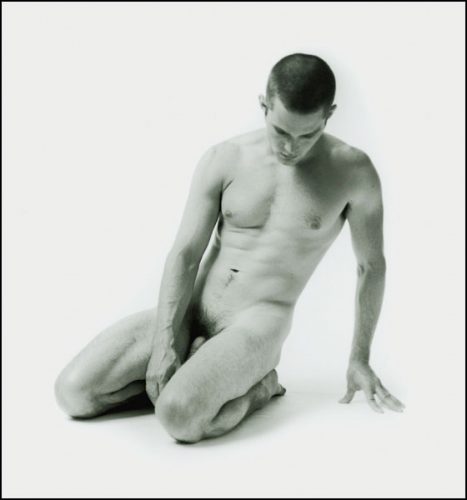
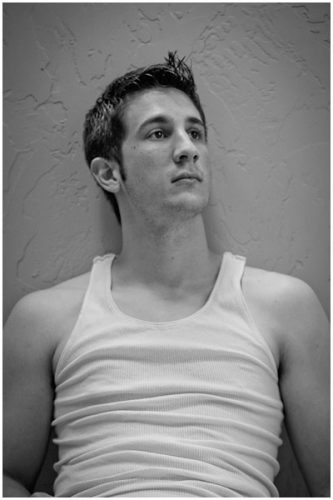 I have been working on finishing my final income generating projects for the season this weekend. Spent today working through the images of the last wedding of the year. Next week I am going to begin to organize myself, get the studio cleaned out, to begin shooting again on this Naked Man Project the following week. It’s been several weeks since I have had the opportunity to shoot something creative of this nature. Many of my subjects are students and most of them will be out for break that week. I have not paid a subject for shooting yet, the entire project so far has been done out of pure passion. It becomes an exchange thing where they get images in exchange for working with me. Though the images are for sell on the site, I make a standard agreement with my subjects that if anything of theirs sells they will get a third of the commission from the image or artwork. My standard agreement has always been: one third goes to the studio for supplies and equipment, I take a third, and a third goes to the subject; so it becomes a commission only basis. This is pretty standard for most photographers approaching this type of work. The images are still highly experimental and the whole process actually began as a way for me to test lighting designs or concepts for other paying gigs I was working on at the time. But it seems recently my focus has begun to shift more specifically to shooting this style of image and so I have actively begun seeking subjects. My subjects come from a variety of sources. In the beginning I mostly drew subjects from gay chat rooms or pick-up sites, because first of all most of them already exposed themselves on those sites and I often thought if they are willing to do it there they might be inclined to work with me on some my ideas. But my age becomes the biggest limitation as most of them are exposing themselves there to pick up other hot YOUNG guys and not really interested in the creation of art, silly me to think otherwise, right! So I have completely shifted away from looking there much anymore. Now they mostly become friends that I either meet or run into at social events in the community. Oddly enough, not many people in my community know about my work and what I am doing. Not even in the gay community. And oddly enough more of my subjects are actually straight and not gay at all. Occasionally I will see someone that I think has an alluring quality that draws my attention, an attitude, and a look in their eyes, but I am mostly drawn to personality and I will approach them. I am not really concerned about the physical shape of the person, as I am they will be open to honestly examine and explore their identity with me throughout the process. Most everyone is just an ordinary person you would meet off the street. It’s actually quite remarkable the transformation many of them go through during the process and the qualities they take on in my images, may not be what you would see in them passing them on the street. To me this is what makes the process so utterly fascinating because I believe everyone has something remarkable about themselves, if they are allowed to tap into it. It becomes a new way of seeing ourselves, in a new light, so to speak. But once someone has worked with me. It seems they always want to come back, and this is where the process really become interesting. People are rarely comfortable with the idea of seeing themselves naked the first time. The response is often startling for most everyone who comes in. Often is as startling for me. Each session is as unique as the subject. I do not have a standard formula and the beauty I seek becomes revealed in the moment. So far everyone has been from Montana, mostly drawing from the Missoula area. I am always looking for new subjects and ideas, so if you know of someone wanting to explore some images with me please send me an email. It’s a simple fun process and you do not have to expose it all, you only take it where you are comfortable. Fully clothed is optional after all it’s about you.
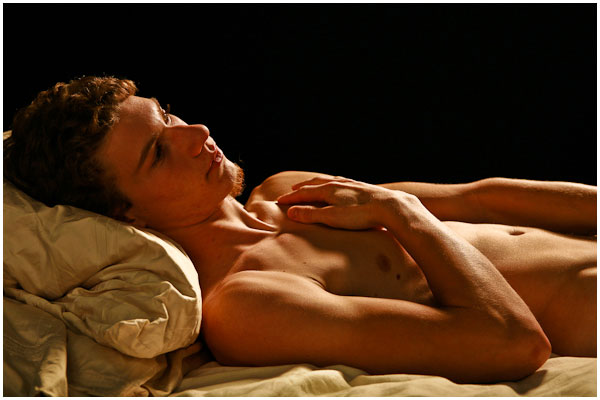 For some reason I have been thinking lately about the lonely death of the American writer Tennessee Williams. Here is a brilliant man who has crafted some to the greatest plays of all time for the American Theater. Things like A Streetcar Named Desire, The Glass Menagerie, and Cat On A Hot Tin Roof. He choked to death on the cap of some eye drops he was trying to open with his mouth on February 25, 1983. How is it that a man with such a great mind for creating some of the most fascinating and complex character studies can pass away from something so insignificant as a bottle cap? Tennessee Williams is probably one of the most influential people on my life and work. As a young theater student in my twenties, when I had finally entered his remarkable world, I felt like I had finally found a home. He wrote about all the things we as culture in Montana like to keep hidden and considered taboo: alcoholism, homosexuality, addiction, beauty, the loss of beauty, fear, doubt, and self-loathing. A world where people were trapped by their often-brutal existence. Nothing seemed sacred to Tennessee. He himself grew up in a shattered world, feeling closest to his sister Rose. She was schizophrenic, in and out of hospitals, eventually becoming lobotomized; she became the wellspring for much of his characterizations. He used the dysfunction of his life to add life to those remarkable characters of Blanche, Brick, Laura, or Alma. Everything he wrote seemed to plummet into the heart of darkness whether it was a play, novel, or even a short story. His writing was filled with passion, honesty, and above all humility. When I entered this world I somehow knew most of these characters and could see so much of his despair and depression within myself. I became addicted and spent a year reading everything consumable about the man. Eventually I directed a production of The Glass Menagerie for my senior project at the University. I still get a giddy feeling when I read anything written by this master and am still captivated by the ground away versions of the Hollywood classics. That scene with Elizabeth Taylor blurting out the truths of Sebastian using her for procurement of young boys leading to his cannibalistic death before she is about to be lobotomized by his mother, Katherine Hepburn, who will do anything to keep the truth hidden in
 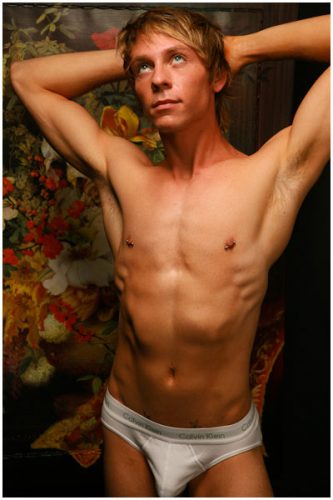 I am strongly becoming empowered by other artists’ images. I have been working with several other artists from around the world who have submitted images and writings that I have been creating galleries of for this project. It means spending a great deal of time with each image to build page by page and the more I study others work and talk to them the more I somehow become connected to their worlds. There is such strength in the impression they impart on their works no matter the style of medium they work. Each piece needs to be studied individually to really understand its power. In many ways it’s unfortunate to show such a large body of work because it forces us to skim through it as a collection without really paying attention to the detail. Where as each piece is a single moment suspended in time, which has often taken hours, days, some times even months to create. I am beginning to realize the images should be looked at individually. Unfortunately, we live in a world where we are inundated with so much imagery that we often just spend a few moments working our way through the vastness of it all. In olden days, images were hung on a wall of a gallery, museum, or salon and you were forced to interact and respond to the pieces that hung before you and when something really caught your eye you could linger and try to unravel it’s mysterious influence. I don’t think this happens so much anymore. We may bookmark or download an image and it becomes part of a vast collection, we may never even get back to again, because there is something new to see. And often times when we do go back and look at an image it will not have the same impact it had in the first place because we have changed and now see it from another perspective. But if we linger long enough, the power of the artists’ vision begins to take hold and influences the way we see ourselves and our own sense of our own creation and we see the artist as a mirror to ourselves. In the 1972 version of the film “Cabaret” the director Bob Fosse borrowed an idea from the original script in which the play ends by dropping a large mirror down so the audience can literally see the reflection of themselves revealing and asking us to examine the judgmental racism of Nazi Germany within ourselves. It is a powerful moment of the show. Though it doesn’t quite work on film the mirror is still there and becomes a reflection turning our focus inward. Art dealing with the still taboo subject of male nudity still has that impact and I am delighted to be and adoringly enamored to the be the in company of such amazing talents.
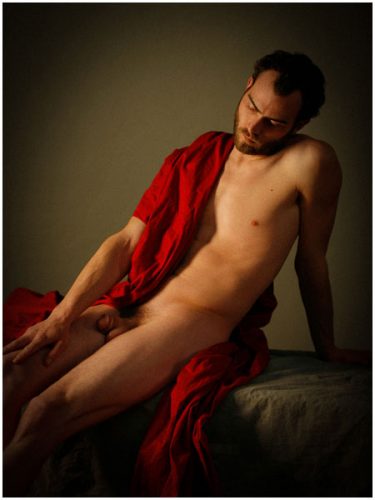 I have a young extremely talented filmmaker friend who has developed a brilliant script that he is trying to raise funding to produce. It’s going to be an extremely low budget film with a wallop. I have read the script and it very good and having seen this kid’s work from the past I totally can see his vision and know he can pull it off to create something extraordinary. The story centers around a guilt-ridden custodian of a decaying hotel that is dragged back from despair by a mercurial young woman with her own bleak past.