 For some reason I have been thinking lately about the lonely death of the American writer Tennessee Williams. Here is a brilliant man who has crafted some to the greatest plays of all time for the American Theater. Things like A Streetcar Named Desire, The Glass Menagerie, and Cat On A Hot Tin Roof. He choked to death on the cap of some eye drops he was trying to open with his mouth on February 25, 1983. How is it that a man with such a great mind for creating some of the most fascinating and complex character studies can pass away from something so insignificant as a bottle cap? Tennessee Williams is probably one of the most influential people on my life and work. As a young theater student in my twenties, when I had finally entered his remarkable world, I felt like I had finally found a home. He wrote about all the things we as culture in Montana like to keep hidden and considered taboo: alcoholism, homosexuality, addiction, beauty, the loss of beauty, fear, doubt, and self-loathing. A world where people were trapped by their often-brutal existence. Nothing seemed sacred to Tennessee. He himself grew up in a shattered world, feeling closest to his sister Rose. She was schizophrenic, in and out of hospitals, eventually becoming lobotomized; she became the wellspring for much of his characterizations. He used the dysfunction of his life to add life to those remarkable characters of Blanche, Brick, Laura, or Alma. Everything he wrote seemed to plummet into the heart of darkness whether it was a play, novel, or even a short story. His writing was filled with passion, honesty, and above all humility. When I entered this world I somehow knew most of these characters and could see so much of his despair and depression within myself. I became addicted and spent a year reading everything consumable about the man. Eventually I directed a production of The Glass Menagerie for my senior project at the University. I still get a giddy feeling when I read anything written by this master and am still captivated by the ground away versions of the Hollywood classics. That scene with Elizabeth Taylor blurting out the truths of Sebastian using her for procurement of young boys leading to his cannibalistic death before she is about to be lobotomized by his mother, Katherine Hepburn, who will do anything to keep the truth hidden in Suddenly Last Summer is one of the greatest moments in film history and still sucks me in with it’s intensity. I could write a year of just blogs on Tennessee Williams alone.
So much of my own imagery and the worlds I enter with my own photography have to do with the feeling, tone, and mood of Tennessee Williams characters and stories. There is a beauty in the darkness where we remain hidden. My work becomes about exposing the inner life of my characters in a raw and sometimes vulnerable way. There is so much depth hidden within all of us that is rarely allowed to surface. Yet there is remarkable beauty in that depth. This is the place I like to explore with my subjects. This has been a year of finding a wholeness within myself and I feel that dysfunction beginning to fade. I fear this may affect my work. I somehow doubt it because I have always got Mr. Williams to remind me of where I have been. To me he is the essential homosexual on my shelf. It’s unfortunate the upcoming generation doesn’t even know his name, as the quotes of his characters imbued my generation and gave life to an culture, fade into a lost oblivion. We no longer rely on the kindness of strangers, but instead become the strangers.
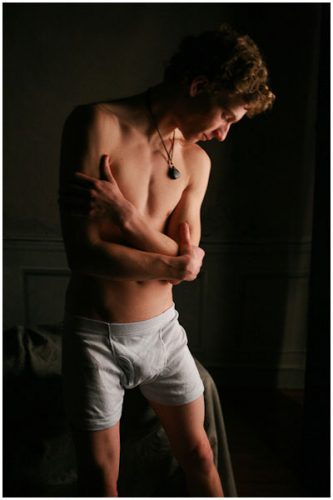 The first novel I ever remember reading that had anything to do with male relationships was called Giovanni’s Room by James Baldwin. I am not exactly sure how I stumbled upon it or exactly when I first read it, but I remember being very young and it left a lasting visual impression in my mind. It’s the story of an American who recognizes his sexual impulse for men. Goes to Europe is about to get married to a woman, but torn by this unspoken desire that seems to hold him back. He can’t quite make the commitment and they separate in order to give him time to think about it. He is in Paris and falls in lust with a young Italian bartender named Giovanni; they have passionate sex in the grungy dark recess of Giovanni’s room for a chapter or so before doubt and self-reasoning set in. I won’t spoil the ending. It was written in 1956 and Baldwin does a fantastic job of vividly bringing you to this era in Paris. In fact I am quite surprised this has never been adapted into a movie, because the story totally lends itself to that sort of format. There are certain images that have haunted my memory for so many years about this book and perhaps it time to pull it back off the shelf for another reread.
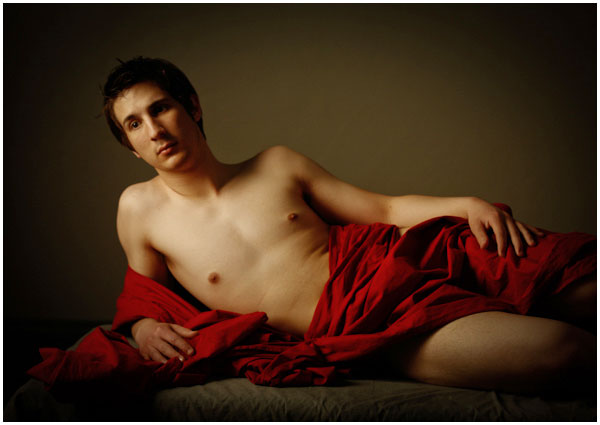 Last night I had dinner with an old friend that I have known for years. He is a young kid, originally from California who came to Montana to go to the University. He is a very successful independent business man at the age of 35 who has always been a role model and inspiration to me. About twelve years ago, when I was first getting into photography, we and a few other people started a venture together, to build a stronger gay community in our small city of Missoula. It seemed the time was ripe and I had been a part of creating a men’s focus group to identify and build a stronger healthier way to look at ourselves using federal prevention money from the Ryan White Act. Coming out of this group I saw a need for unity and to somehow obliterate the isolation and lack of communication that kept us hidden and closeted.